No Heat
The furnace does not respond to the thermostat, starts but fails to ignite, or shuts down before delivering warm air.
HVAC furnace service in Janesville, Wisconsin
Get skilled troubleshooting and a practical repair plan when your heating system stops keeping up with southern Wisconsin weather.
Diagnose before replacing parts
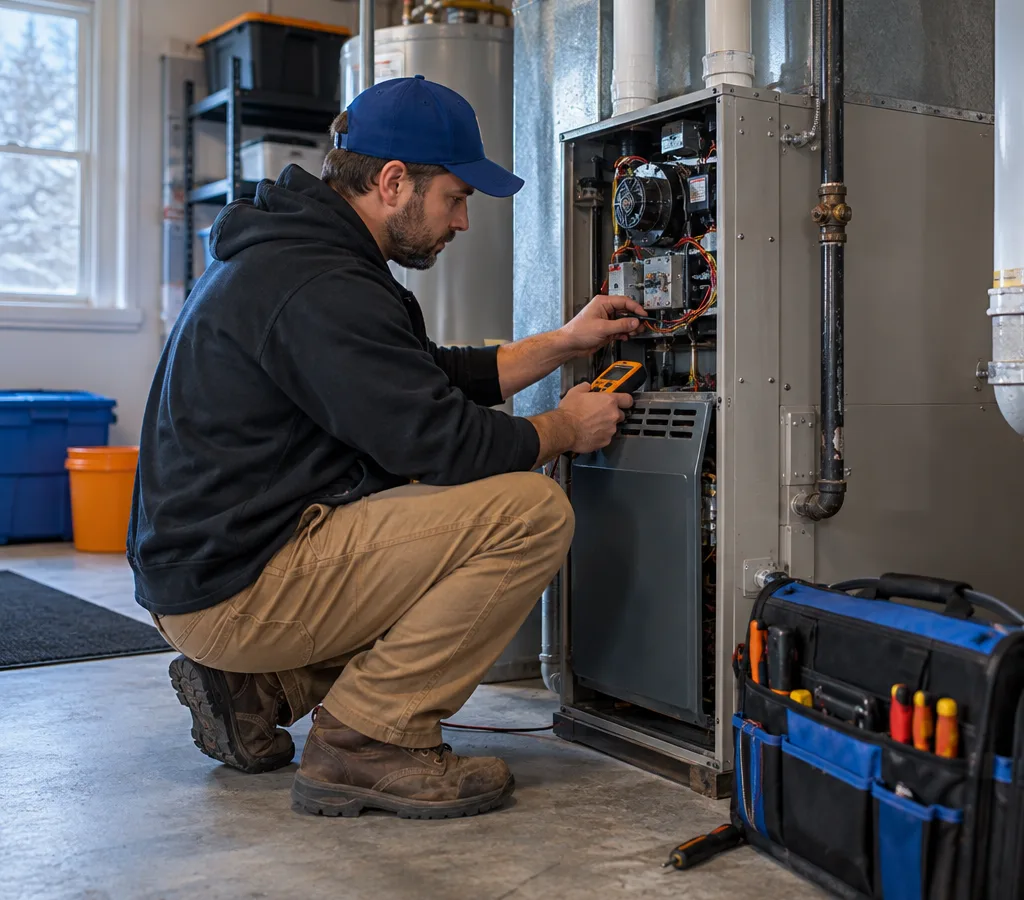
When you need HVAC Janesville WI service, the first priority is finding the actual fault. A furnace that will not start may have a failed igniter, an open safety switch, a thermostat issue, or an interruption in its power or fuel supply. Weak airflow can point to a loaded filter, blower trouble, blocked return air, or duct problems. Replacing parts before testing these possibilities can waste time and money.
Furnace Repair Janesville WI takes a diagnostic approach. We listen to what changed, inspect the equipment, test the operating sequence, and explain the findings before repair work begins. As a furnace company Janesville homeowners rely on, we focus on safe operation, clear communication, and repairs that address the confirmed cause of the problem.
Janesville winters place sustained demand on heating equipment. Long run times can expose worn motors, dirty flame sensors, weak igniters, failing capacitors, and airflow restrictions. Prompt attention matters when a system cycles repeatedly, makes a new sound, produces cool air, or cannot reach the thermostat setting.
Measured furnace testing
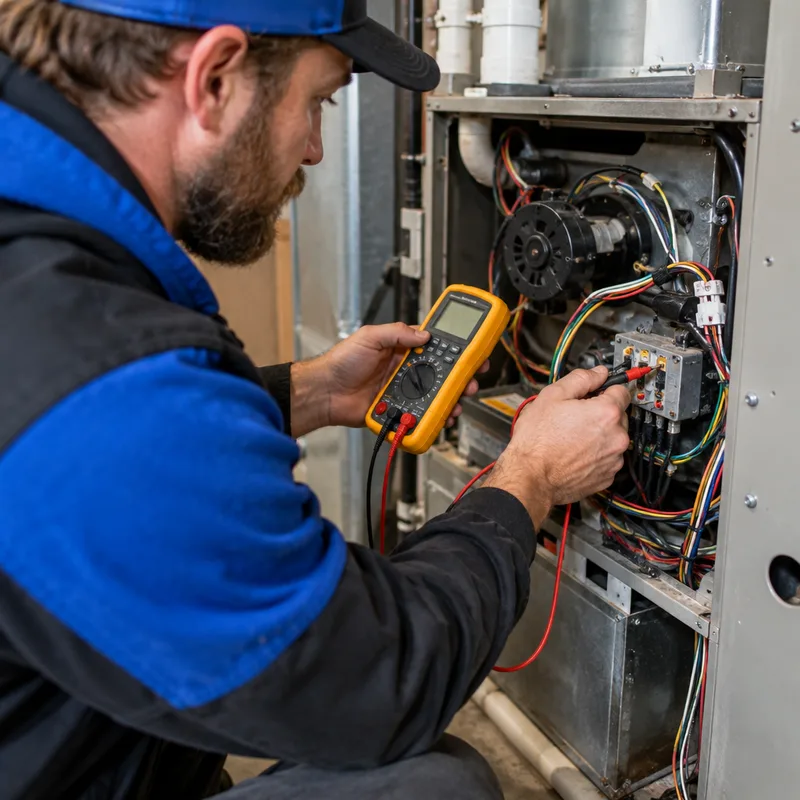
A dependable diagnosis follows the furnace's sequence of operation. The thermostat calls for heat, the inducer starts, pressure switches prove draft, the ignition system activates, the gas valve opens, and the blower moves warmed air through the ductwork. A fault at any step can stop the cycle or trigger a safety shutdown.
Testing may include checking thermostat signals, electrical connections, flame-sensing current, ignition components, blower operation, temperature rise, filter condition, venting, and safety controls. For gas equipment, combustion and exhaust concerns deserve careful attention. A cracked heat exchanger, suspected carbon monoxide issue, gas odor, or damaged vent connector calls for immediate shutdown and professional evaluation.
The goal is a repair recommendation tied to evidence. You should know what failed, whether related components need attention, and whether the repair makes sense given the equipment's condition.
Furnace symptoms and faults
The furnace does not respond to the thermostat, starts but fails to ignite, or shuts down before delivering warm air.
The system starts and stops frequently because of overheating, restricted airflow, control faults, flame loss, or equipment sizing concerns.
Low output at registers may involve a dirty filter, blower problem, closed damper, duct restriction, or inadequate return air.
Rattling, scraping, squealing, booming, and persistent humming each point toward different mechanical, ignition, or mounting issues.
Incorrect readings, damaged wiring, failed relays, or control-board errors can prevent a sound furnace from operating correctly.
Long cycles and rising energy use can result from maintenance needs, airflow restrictions, duct losses, or declining equipment performance.
From symptoms to verified operation
Tell us when the problem began, what the furnace does now, and whether you noticed odors, noises, fault lights, or changes in airflow.
The technician checks the thermostat, filter, furnace cabinet, electrical connections, ignition sequence, blower, venting, and applicable safety controls.
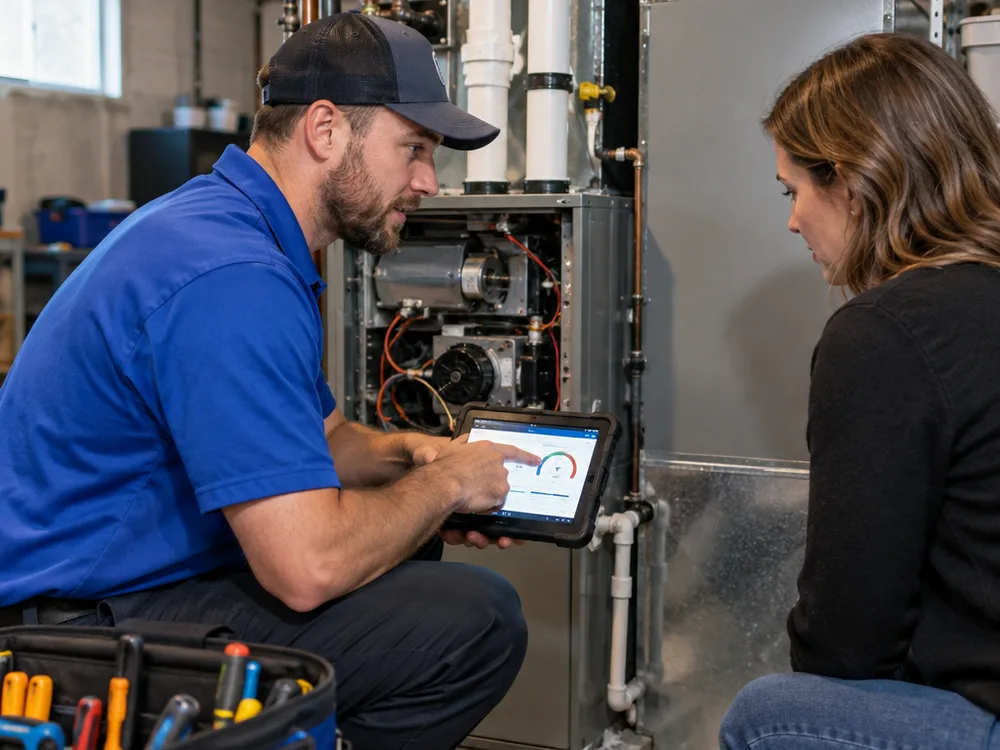
You receive a plain explanation of the confirmed fault, the proposed repair, and any condition that may affect the decision.
After authorization, the technician repairs or replaces the affected component and restores the equipment to a complete operating cycle when possible.
The final check confirms startup, heat delivery, blower response, shutdown, and the operation of relevant safety controls.
Practical equipment decisions
Repair is often reasonable when the failed part is serviceable, the heat exchanger is sound, and the rest of the system is in workable condition. Common repairs can involve igniters, flame sensors, capacitors, blower components, limit switches, pressure switches, thermostats, and control boards. The right choice still depends on the diagnosis rather than the name of the failed part alone.
Replacement deserves consideration when a furnace has a serious safety defect, repeated breakdowns, hard-to-source parts, or several costly components approaching failure. Comfort complaints also matter. An aging system that runs constantly yet leaves rooms cold may have equipment, duct, or building-envelope issues that one repair cannot correct.
Ask for both options when the decision is close. Compare the immediate repair cost with the equipment's overall condition, expected future work, comfort performance, and installation requirements. A useful recommendation explains the tradeoffs without pressuring you toward a larger job.
Southern Wisconsin heating conditions
Southern Wisconsin heating systems must handle freezing conditions and extended periods of operation. During cold weather, a minor airflow restriction can contribute to overheating and limit-switch trips. Snow or ice near an outdoor intake or exhaust termination can also interrupt operation on high-efficiency furnaces. Terminations should remain clear, but homeowners should avoid dismantling vent components or bypassing a safety switch.
Housing styles and mechanical layouts vary across Janesville. A furnace in a basement may have different access, drainage, duct, and venting conditions than equipment in a utility closet or crawlspace. Older duct systems can also affect temperature balance even when the furnace itself is operating properly. Diagnosis should account for the entire air path, including return grilles, filters, supply registers, and the blower.
Alliant Energy and Wisconsin Public Service provide utility service in parts of the Janesville area, depending on the address and utility territory. Utility interruptions should be ruled out when multiple gas or electric appliances stop working at the same time. If you smell gas, leave the building, avoid switches and ignition sources, and contact the appropriate utility or emergency service from a safe location.
Furnace repair in Janesville typically ranges from $150 to $1,200, while major blower, control-board, or gas-valve work may cost more. A basic service visit or simple sensor repair generally falls near the lower end; complex electrical, ignition, or mechanical failures fall higher.
Final price depends on the diagnosis, furnace type, part availability, access, labor time, and whether after-hours service is needed. Related venting or airflow defects can also change the scope. Your exact cost is confirmed after the furnace is inspected and the repair options are reviewed.
If your furnace is cycling, blowing cool air, or refusing to start, arrange an inspection before the problem leaves your home without dependable heat.
Call (608) 530-1159Common homeowner questions
Many common furnace faults can be diagnosed during one service visit, although part availability and intermittent symptoms can extend the process. The technician typically runs the heating sequence, checks fault codes, tests relevant electrical values, and inspects airflow and venting before recommending work.
Turn the furnace off if you hear scraping, grinding, repeated booming, or another sudden and severe sound. These noises can indicate blower damage, loose moving parts, or delayed ignition. Janesville homes need reliable heat during freezing weather, but continued operation can worsen damage or create a safety concern.
A furnace may blow cool air because ignition failed, the burner shut down on a safety limit, the thermostat fan setting is incorrect, or the blower continues running after a fault. Check that the thermostat is set to heat and the filter is not heavily loaded, then arrange testing if warm air does not return.
Yes, a heavily restricted filter can reduce airflow enough to overheat the furnace and open its high-limit switch. The burners may shut off while the blower continues running. Replace the filter with the correct size and type, but seek service if the furnace keeps tripping its limit.
One reset may restore operation after a temporary interruption, but repeated resets are not a repair. Furnace lockouts can result from ignition failure, flame-sensing trouble, pressure-switch faults, blocked venting, or overheating. Do not bypass a switch or continue resetting equipment that will not complete a normal cycle.
Note the thermostat setting, filter condition, furnace brand, visible fault-light pattern, and exactly what happens during startup. Clear safe access to the equipment and keep pets away from the work area. If the failure comes and goes, a short recording of the sound or startup behavior can help.
A gas odor, carbon monoxide alarm, visible flame outside the burner area, smoke, electrical arcing, or suspected venting failure requires immediate action. Leave the building when gas or carbon monoxide may be present and contact the appropriate emergency resource from a safe location. Do not restart the furnace until it has been evaluated.
Describe the symptoms you are seeing, and Furnace Repair Janesville WI will help arrange skilled diagnosis and a clear repair plan.