Heating and cooling service in Janesville, Wisconsin

Heating And Cooling In Janesville, WI

Practical diagnostics, clear recommendations, and prompt service for year-round home comfort.

✓ Diagnosis before parts ✓ Clear recommendations ✓ Janesville home service
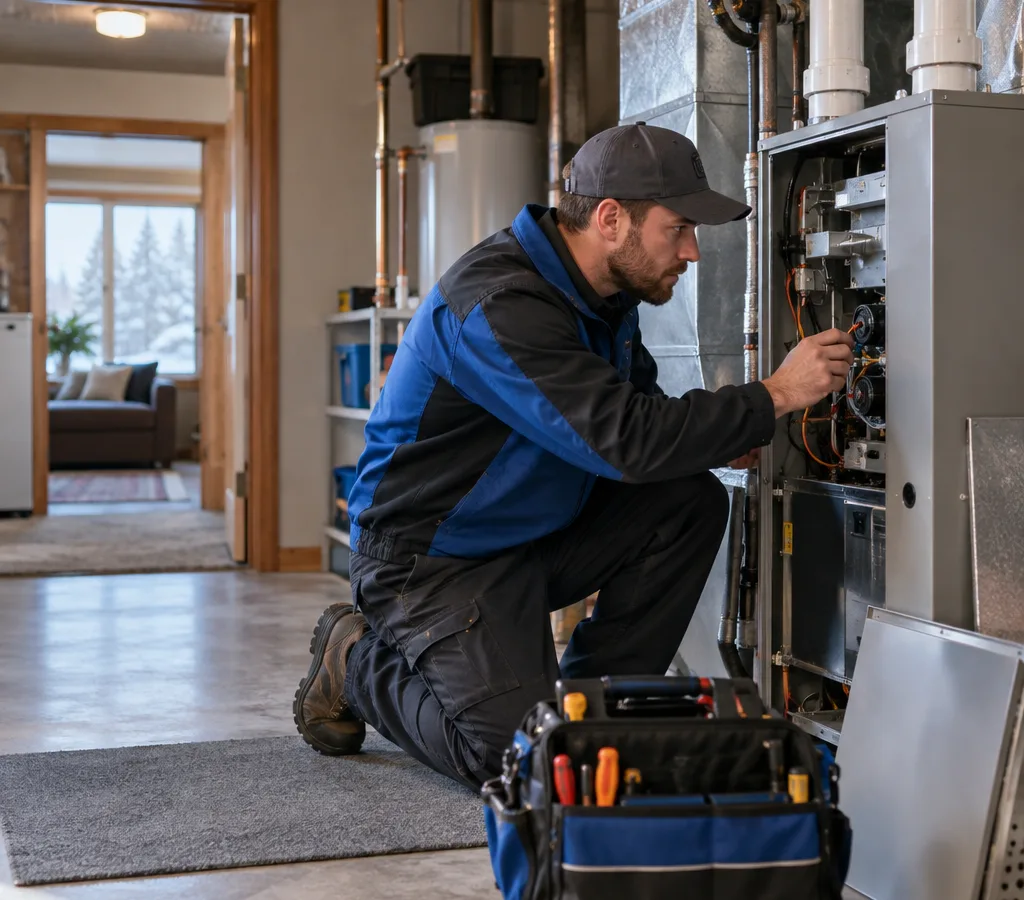
An HVAC technician checking a residential heating and cooling system inside a Janesville home

Diagnose the cause before replacing parts

Dependable Heating and Cooling for Janesville Homes

When heating and cooling in Janesville, WI, stops working properly, the first job is to find the actual fault. A weak capacitor, dirty flame sensor, failed igniter, restricted filter, thermostat problem, or low airflow can produce similar symptoms. Replacing parts before testing the system can add cost without fixing the cause.

Furnace Repair Janesville WI handles residential heating and cooling concerns with diagnosis first. Our furnace specialists serving Janesville, WI inspect the equipment, explain what testing found, and discuss sensible repair or replacement options before work moves forward. The goal is a system that heats and cools consistently, operates safely, and matches the needs of the home.

Janesville experiences cold winters and warm, humid summer weather, so both sides of an HVAC system matter. Heating equipment needs reliable ignition, combustion, and airflow during sustained cold. Air conditioning needs clean coils, correct refrigerant operation, effective drainage, and enough airflow to remove heat and indoor moisture.

Whole-home HVAC support

Janesville Heating and Cooling Services

Heating System Diagnosis

Testing can cover thermostat signals, electrical controls, ignition components, safety switches, blower operation, temperature rise, and visible venting conditions. The findings identify whether maintenance, a targeted repair, or a larger equipment decision is appropriate.

Air Conditioning Service

Cooling diagnostics may include the contactor, capacitor, condenser fan, indoor blower, evaporator coil, condensate drain, temperature split, and accessible refrigerant-circuit conditions. Refrigerant is not added unless testing indicates that it is needed.

Airflow and Comfort Problems

Hot and cold rooms can result from a clogged filter, closed damper, obstructed return, duct leakage, blower trouble, or equipment sizing. Airflow measurements and temperature readings help separate a distribution problem from an equipment fault.

Preventive Maintenance

Routine service checks accessible components before peak-season demand. Cleaning, inspection, filter attention, drain checks, and operating tests can expose worn parts or unsafe conditions before they cause a shutdown.

System Replacement Guidance

When repair is no longer practical, equipment should be selected using the home's heating and cooling needs rather than the old unit's label alone. Efficiency ratings, duct capacity, fuel type, electrical requirements, and installation details all affect the decision.

Thermostat and Control Issues

Incorrect settings, damaged wiring, depleted batteries, sensor errors, and control-board faults can prevent otherwise functional equipment from running correctly. Testing establishes whether the thermostat or the HVAC equipment is causing the problem.

Measured system testing

What a Proper HVAC Diagnostic Includes

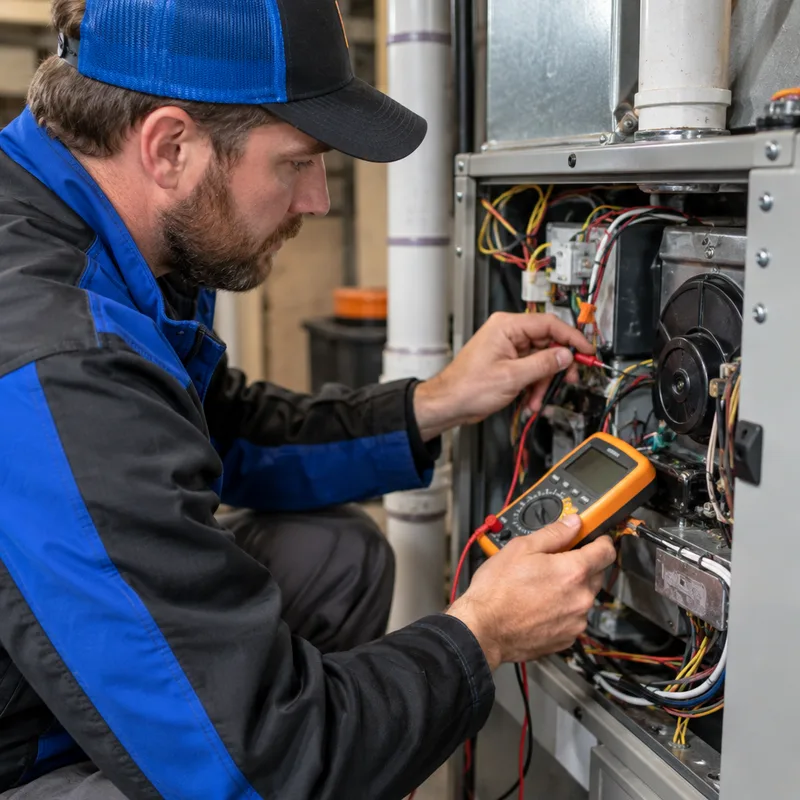
Close view of an HVAC technician using a digital multimeter and temperature probes while diagnosing residential equipment

A useful service visit starts with the symptom: no heat, short cycling, weak airflow, unusual noise, uneven temperatures, or cooling that runs without reaching the thermostat setting. The technician then tests the operating sequence instead of relying on the symptom alone.

For a gas furnace, that sequence can include the thermostat call, inducer motor, pressure switch, igniter, gas valve, flame sensor, limit controls, and blower. Visible flue and combustion-air conditions also deserve attention. For an air conditioner, diagnosis often covers line and load voltage, amp draw, capacitor condition, fan operation, coil condition, condensate drainage, and supply-versus-return air temperature.

Measurements matter. Temperature rise should be compared with the furnace manufacturer's rated range, and cooling performance should be judged with indoor and outdoor conditions in mind. If a safety control has opened, the underlying cause must be addressed before the control is reset or replaced.
From symptoms to verified operation

How Heating and Cooling Service Works

  1. 01

    Describe the Problem

    Share what the system is doing, when the trouble began, and whether any breaker, filter, thermostat, or equipment changes occurred recently. Details such as intermittent operation or a specific sound can shorten diagnostic time.

  2. 02

    Inspect and Test

    The technician checks the thermostat, equipment condition, airflow, controls, and relevant operating measurements. Testing follows the system's sequence of operation so the recommendation is tied to evidence.

  3. 03

    Review the Findings

    You receive an explanation of the fault, the proposed work, and factors that may affect the equipment's remaining service life. When more than one reasonable option exists, those choices should be discussed before authorization.

  4. 04

    Complete and Verify the Work

    After an approved repair or adjustment, the system is operated through a full cycle. Final checks confirm that controls respond, airflow is present, and the original symptom has been addressed.

A residential outdoor air-conditioning unit beside a Wisconsin home, with a technician inspecting clearances and coil condition

Seasonal comfort planning

Heating and Cooling Janesville WI Homeowners Can Plan Around

Southern Wisconsin weather puts HVAC equipment through distinct heating and cooling seasons. A system may sit unused for months before being asked to run for long periods, which is why startup problems often involve components such as igniters, capacitors, motors, contactors, and condensate drains.

The home's construction also affects comfort. Older houses may have additions, finished upper levels, limited return-air pathways, or ducts routed through spaces that lose heat. Newer construction may be tighter and more sensitive to ventilation, filtration, and equipment sizing. These conditions should be evaluated rather than assuming a larger unit will solve uneven comfort.

A practical seasonal plan includes replacing or cleaning the correct filter, keeping outdoor equipment clear, leaving supply and return registers open, and scheduling service when performance changes. Burning odors that persist, repeated breaker trips, water around indoor equipment, ice on refrigerant lines, or frequent cycling deserve professional attention.

Evidence-based equipment planning

Repair or Replace: Making a Sound Equipment Decision

Repair is often reasonable when the fault is isolated, replacement parts are available, and the equipment otherwise operates safely. Replacement deserves consideration when major components have failed, breakdowns are recurring, corrosion or heat-exchanger concerns are present, or the system cannot provide acceptable comfort without extensive work.

Age alone does not settle the question. Compare the repair scope with the condition of the blower, heat exchanger, compressor, coils, controls, and duct system. Also consider whether the current equipment is properly sized. Oversized air conditioning can cool quickly but cycle off before removing enough humidity. Oversized heating equipment may cycle frequently and create larger temperature swings.

For replacement planning, Manual J is the recognized residential load-calculation method, while Manual S applies those loads to equipment selection. Duct capacity should also be checked. New equipment cannot deliver rated airflow through a restrictive return, undersized trunk, or poorly configured branch ducts. A clear proposal should identify the selected equipment, efficiency rating, major installation work, controls, and any duct or electrical changes included.

If your system is noisy, unreliable, or struggling to hold the thermostat setting, arrange an evaluation before a minor operating problem becomes a complete loss of comfort.

Call (608) 530-1159

Common homeowner questions

Heating and Cooling Questions from Janesville Homeowners

How quickly can a heating or cooling problem be diagnosed?

Many common faults can be identified during one service visit, although intermittent failures or problems requiring special parts may take longer. Access to the equipment, the system's condition, and whether it can be safely operated all affect diagnostic time. During Janesville's cold weather, loss of heat should be treated promptly, especially when the indoor temperature is falling.

What affects the cost of HVAC repair in Janesville?

The failed component, diagnostic time, equipment access, part availability, refrigerant work, and any related electrical or airflow problem determine the final cost. A simple sensor or capacitor issue differs substantially from a motor, control board, coil, or compressor repair. The exact scope should be confirmed after testing rather than estimated from the symptom alone.

Should I shut the system off if it is making a strange noise?

Shut the equipment off if you hear grinding, metal-on-metal contact, repeated electrical buzzing, or a loud new mechanical sound. Continued operation can worsen motor, wheel, bearing, or compressor damage. If you smell gas or suspect combustion fumes, leave the building, avoid switches or flames, and contact the gas utility or emergency services from a safe location.

Why does my furnace start and stop so often?

Frequent cycling can result from a restricted filter, airflow limitation, thermostat problem, overheating, flame-sensing fault, pressure-switch issue, or oversized equipment. A technician should observe the operating sequence and check whether a safety limit is opening. Repeatedly resetting the system does not correct the cause.

Why is the air conditioner running but not cooling the house?

A running system may fail to cool because of a dirty coil, failed outdoor fan, weak capacitor, restricted airflow, refrigerant-circuit problem, or compressor fault. Check that the thermostat is set to cooling and that the filter is not blocked. Ice on the indoor coil or refrigerant line is a reason to stop cooling operation and arrange service.

How often should heating and cooling equipment be maintained?

Heating and cooling equipment should generally be checked before or during each operating season, with frequency adjusted for equipment type, filter conditions, pets, renovation dust, and manufacturer guidance. A Janesville home that relies on both forced-air heating and central cooling benefits from checking combustion and heating operation separately from cooling, coil, and condensate performance.

Can uneven room temperatures be fixed without replacing the HVAC system?

Uneven temperatures can often be improved without replacing the main equipment. The cause may be blocked returns, closed dampers, disconnected ducts, insulation gaps, excessive filter resistance, or an unbalanced duct layout. Diagnosis should begin with airflow and temperature measurements because installing larger equipment can make cycling and comfort problems worse.

Get a Clear Plan for Your Home Comfort

Describe the symptoms you are seeing, and Furnace Repair Janesville WI will help determine the right next step for dependable heating and cooling.